
“In a world where you can be anything… be kind.” – Caroline Flack
What is the purpose of world kindness day?
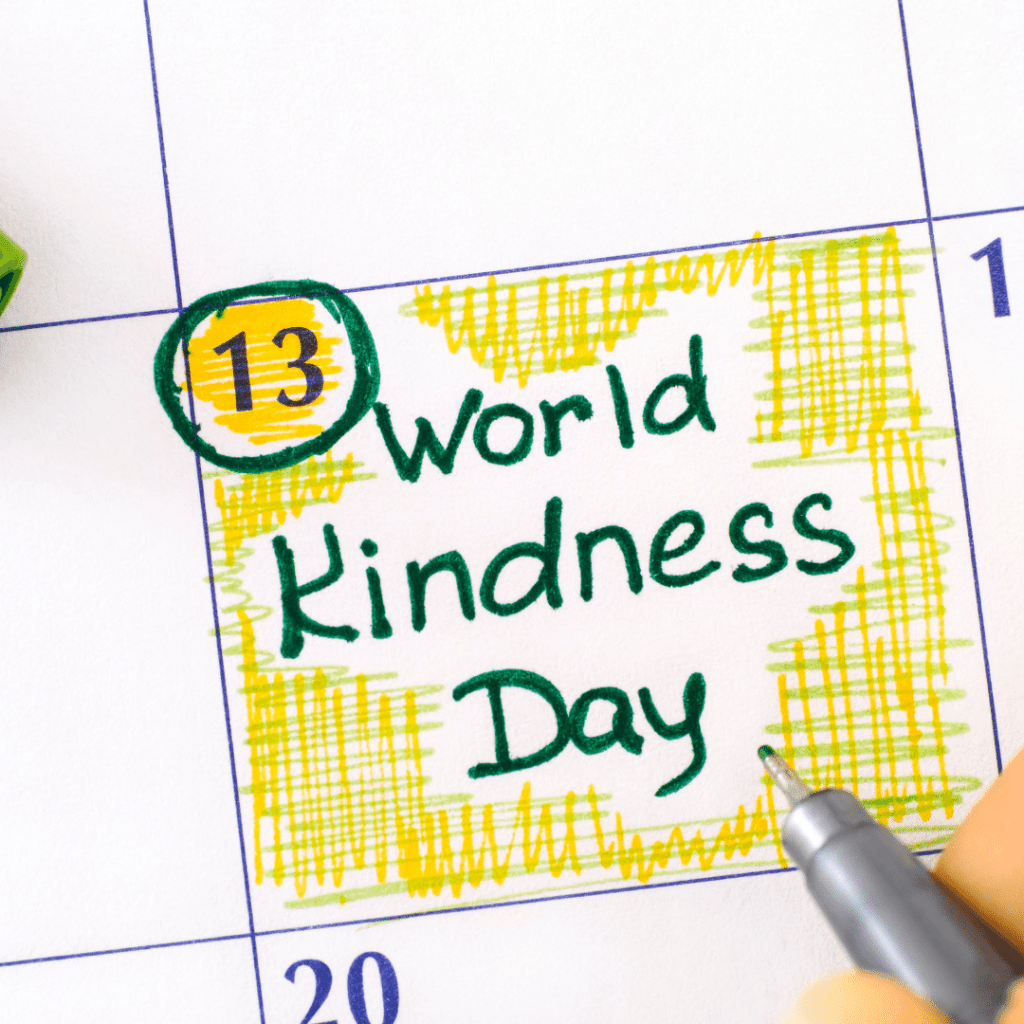
World Kindness Day is November 13th… the purpose of this day is to go out of your way to show kindness to others. Of course, there is a magnitude of ways to be kind. We hope you participate and show some kindness to others in a purposeful way. This year, more than ever we are seeing scary statistics and we need kindness so badly.
Sometimes the smallest gesture can go the furthest. Sometimes saying “Thank you” to a stranger, or holding a door can really change their day. A few kind words can make someone’s entire day.. with so much negativity in the world right now, it may be needed. If you see someone at work doing a great job, tell them so. Maybe your colleague got new shoes… let them know how great they are.
Our Study Shows How Pokies Became Australia’s Most Popular Casino Game
Few gambling products have embedded themselves into a national culture quite like poker machines have in Australia. Known colloquially as “pokies,” these electronic gaming machines now account for a larger share of gambling expenditure in Australia than in almost any other country on earth. Understanding how this happened requires looking beyond simple popularity metrics and examining the specific legislative decisions, economic incentives, and social conditions that shaped the Australian gambling landscape over several decades. The story is not one of passive consumer preference but of deliberate policy choices, industry lobbying, and a regulatory environment that allowed gaming machines to proliferate in venues that most countries would never have permitted them.
The Legislative Foundations That Enabled Mass Proliferation
The modern era of Australian pokies began in earnest in 1956, when New South Wales became the first jurisdiction in the world to legalise poker machines in registered clubs. This was not a small policy adjustment — it was a structural transformation of how gambling was permitted to operate in everyday social spaces. The New South Wales government granted registered clubs the exclusive right to operate gaming machines, a decision framed at the time as a way to fund community organisations and sporting clubs. What followed was a rapid expansion of the club sector, with venues growing in size and financial sophistication largely because of gaming machine revenue.
Victoria held out significantly longer, maintaining a prohibition on gaming machines in pubs and clubs until 1992. When Victoria finally legalised pokies, it did so through a duopoly licensing model, granting exclusive operator rights to Tabcorp and Tattersall’s. This approach was mirrored in various forms across other states, meaning that by the mid-1990s, every Australian state and territory had introduced some form of legalised gaming machine operation outside of casinos. Queensland legalised machines in clubs and hotels in 1992, South Australia had permitted them in clubs since 1976, and Western Australia maintained the most restrictive approach, confining machines to the Burswood Casino (now Crown Perth).
The cumulative effect of these staggered legislative changes was that Australia developed one of the highest per-capita densities of gaming machines in the world. By the early 2000s, Australia had approximately 200,000 gaming machines operating outside of casinos, representing roughly 20 percent of the world’s total gaming machine stock despite accounting for less than 0.4 percent of the global population. This density was not accidental — it reflected decades of policy decisions that treated gaming machines as an acceptable revenue mechanism for both the state and community organisations.
Design Evolution and the Shift to Electronic Gaming
Early poker machines in Australia were mechanical devices, largely imported from the United States and operating on simple reel mechanisms. The transition to fully electronic gaming machines during the 1980s and early 1990s fundamentally changed the product. Electronic machines allowed for far more complex game mathematics, variable payout structures, and — critically — much faster play. Where a mechanical machine might complete a game cycle in 15 to 20 seconds, electronic machines could complete cycles in under three seconds, dramatically increasing the number of bets a player could place per hour.
Australian manufacturers, particularly Aristocrat Leisure and IGT Australia, became globally significant players in gaming machine design during this period. Aristocrat’s development of the “feature game” — a bonus round triggered by specific symbol combinations — became one of the most influential innovations in gaming machine design worldwide. These features increased player engagement by introducing variable reward schedules that extended session length. The “Big Red” machine released by Aristocrat in the 1980s became iconic in Australian clubs and is often cited as a turning point in how Australians related to gaming machines culturally.
The introduction of note acceptors in the 1990s removed a significant friction point from the gaming experience. Previously, players needed coins to operate machines; note acceptors allowed players to insert paper currency directly, reducing the psychological and physical interruption that handling coins created. Ticket-in, ticket-out (TITO) technology, which replaced coin payouts with printed vouchers redeemable at a cashier or another machine, further smoothed the gambling experience by eliminating the sensory interruption of coin cascades. Each of these technical developments made it easier for players to remain engaged for longer periods.
What the Data Reveals About Player Behaviour and Expenditure
The financial scale of pokies in Australia is difficult to overstate. In the 2022–23 financial year, gaming machines in New South Wales alone generated over $7.5 billion in player losses. Nationally, gaming machine expenditure consistently represents between 55 and 65 percent of total gambling losses in Australia, dwarfing horse racing, sports betting, casino table games, and lotteries combined. This dominance is not simply a function of availability — it reflects the specific characteristics of gaming machine gambling that make it particularly absorbing for a segment of players.
Research into gambling behaviour has consistently identified electronic gaming machines as the form of gambling most strongly associated with problem gambling. The speed of play, the continuous nature of the activity, and the structural features of modern machines — including near-miss outcomes and losses disguised as wins — contribute to what researchers describe as a “high event frequency” product. our study shows that the concentration of gaming machine losses among a relatively small proportion of players is a consistent finding across multiple Australian jurisdictions, with problem gamblers accounting for a disproportionate share of total machine revenue.
The geographic distribution of gaming machines within Australian cities has also attracted significant research attention. Studies using geocoded machine location data have repeatedly found that gaming machine density is higher in lower socioeconomic areas, a pattern documented across Sydney, Melbourne, and Brisbane. This spatial concentration means that the financial impact of gaming machine losses falls unevenly across the population, with communities already experiencing economic disadvantage bearing a higher per-capita burden. The 2010 Productivity Commission report on gambling specifically highlighted this distributional concern, estimating that problem gamblers contributed between 40 and 60 percent of gaming machine revenue nationally.
Regulatory Responses and the Ongoing Policy Debate
Australian governments have introduced various harm minimisation measures over the past two decades, though the scope and effectiveness of these measures remain contested. Mandatory pre-commitment technology — which would require players to set spending limits before beginning a gaming session — was recommended by the 2010 Productivity Commission but has never been implemented in a mandatory form at the national level. The Andrew Wilkie-led push for mandatory pre-commitment between 2011 and 2013, which briefly held significant political leverage due to minority government dynamics, ultimately resulted only in a voluntary pre-commitment trial in the Australian Capital Territory.
State-level responses have varied considerably. Victoria introduced a $1 maximum bet limit on gaming machines in 2018, reducing the maximum bet from $10. New South Wales has moved more slowly on structural reforms, though it has implemented requirements for cashless gaming trials and enhanced harm minimisation signage. The New South Wales government’s 2023 decision to mandate cashless gaming technology across all registered clubs and hotels by 2028 represents the most significant structural change to the sector in decades, though industry groups have contested both the timeline and the technical specifications.
The hotel and club industry has consistently argued that gaming machines provide essential cross-subsidies for other community services, including subsidised meals, sporting facilities, and entertainment programs. This argument has been politically effective in states where the club sector is large and well-organised, particularly New South Wales and Queensland. Critics of this framing note that the social costs of problem gambling — including mental health impacts, family breakdown, financial hardship, and crime — are largely externalised onto health and welfare systems, meaning that the community benefit argument does not account for the full economic picture.
The trajectory of Australian pokies policy over the past 70 years reflects a tension that has never been fully resolved: between the genuine revenue benefits that gaming machines provide to clubs, hotels, and state governments, and the well-documented harms concentrated among the most vulnerable players. The machines became dominant not because Australians are uniquely predisposed to gambling, but because a specific combination of legislative permission, venue accessibility, product design innovation, and industry organisation created conditions in which gaming machines could become embedded in ordinary social life in a way that has no real parallel in other developed economies. Understanding that history is a prerequisite for any serious policy conversation about what comes next.
Encouraging your kids to participate in World Kindness Day is a tradition everyone can get behind. Let your kids know why this day started and why they should get behind it. Encourage kids to hold doors open for others, pick up garbage if they see it outside, give compliments to their peers, and include everyone they may not always hang out with to participate.
As we all know, small businesses are struggling due to Covid shutdowns.. what better time than to show your local vendors kindness by tossing that extra toonie in the tip jar at your local coffee shop.. share your favourite clothing store’s Instagram story… compliment your delivery driver and letting them know how awesome they are. This is such a great opportunity to spread kindness to others.. I bet you it will catch on. This is one thing we want you to spread!
Here are some suggestions on how YOU can spread kindness.
- Send an encouraging text to a friend/family member you haven’t spoken to lately
- Pay for the person’s coffee behind you in line
- Compliment your neighbours lawn
- Smile at the stranger on the sidewalk
- Offer to pick up dinner for a friend
- Volunteer your time to a local nursing home, homeless shelter, or other local organization
- Donate your gently used clothing to a family in need
- Send a close friend flowers
- Hold the door open for a stranger (yes, it can be this simple)
- Bring in donuts for your office
- Try not to complain for an entire day (this one might be hard)
- Offer to take photos for a touristy-looking group
I want to end this post by adding, sometimes you need to be more kind to yourself. We constantly worry about our kids, partners, employees and friends but what about you? Show yourself some kindness this weekend by giving yourself a compliment. Grab that drink from Starbucks you’ve been wanting to try… give yourself an extra 10 minutes in bed this morning. You have to be kind to yourself, in order to be kind to others. You are great, let yourself know that!
“The world is full of kind people. If you can’t find one, be one.” – Unknown
Categories
Latest Articles
Stay up to date
with news and
educational information
[hubspot type=”form” portal=”5213843″ id=”b19f3e1c-0beb-4946-9d04-2bb47dfa17e0″]